The arrival of March brings us halfway through the spring term and well into the aptly named ‘crunch time’. For myself, the second semester has felt like a monotonous journey through a tunnel where the light at the end only serves to illuminate the following tunnels. I think to myself, “just make it to reading week Sara….oh wait I have four midterms after reading week. Alright then after midterms are done I can take that breather. Well no, wrong again because you have two papers due characteristically on the same day that require research and a thesis statement, and an outline and WRITING! Papers are soon followed by finals and alas there is never rest to be found. Is summer my only relief?” On the brighter side of things at least I am sharing this expedition with every other weary and overloaded university student; having others to complain with about the injustices faced by students, though it never helps me get things done, really does make me feel better.
Yet I want to avoid all this! I want to escape the tunnel and travel through second term on a warm, sunlit, quiet, and soothing country road. Is this a laughable naïve fantasy? In part yes, but I am optimistic enough to believe that there is some relief to be had. One of the best kinds of therapy begins with the move from the “AHH I have so much to do” approach to the more reasonable analysis of exactly what needs to be done. If you do this in your head it can often be accompanied by a dangerous level of panic. Somehow in your mind tasks grow to more monumental proportions, probably because they are being viewed all together and each with their own subtasks. I find it more comforting and focusing to put these tasks in list form. It never fails to amaze me how this act magically seems to whittle down what I have to do into an amount I can actually wrap my head around.
From there I usually breakdown the assignments and tests into building blocks that I can manage in one sitting. If I have to read a novel over the course of a week for example, and the book has 287 pages well that’s about 41 pages per day, or 32 pages per day during the week and double that on Saturday and Sunday. However you may choose to break it down, smaller components are a lot easier on a person’s stress level especially if one can learn to focus more strongly on these individual parts. If I can think in my head that all I have to read today is 32 pages of a novel, although a minor part of the whole book, I can feel confident and self-satisfied that I can get it done. Even when combined with other minor tasks, parts are much easier to tackle than the whole; planning to do 3 questions on my chemistry assignment and read 32 pages is a lot easier than doing a 15 question assignment and reading a 287 page novel.
Personally I am a big schedule person and aside from separating jobs into smaller pieces, I will assign timeslots to each item. It’s not so much about exactly following what I have set out. Most of the time, I extend or cutback or change the time of day I work on something depending on how the work is going and what I feel like doing at the time. The schedule’s usefulness comes instead from allowing me to calculate the amount of time I have to allot to task in order to get things done, therefore building up my comfort in knowing that the amount of work I have to accomplish is doable.
It’s important to keep in mind that the extent of list-making and scheduling required to alleviate stress depends on the person. Some students will probably stop at evaluating what they have to do and will then be worry-free enough to work from there. Others will adhere to schedules down to the minute. What’s more important is being aware that in times of panic about ALL the things you have to do, figuring out and focusing on the smaller building blocks can be a valuable tool in making it through.
Sara
Monday, March 20, 2006


Wednesday, March 08, 2006
Organization for the Disorganized Student
Lately, I’ve seen a lot of students who are having trouble managing their time. Assignments, tests and exams that seem far away tend to sneak up on us. One way to avoid the last minute panicky rush to study or complete an assignment is to be organized. If you are anything like me, day planners get lost in the back seat of the car or at the bottom of your backpack. Here is a quick way for the hopelessly disorganized person to stay on top of his or her school work.
- Make yourself a big calendar for the remaining months of school (these are also available on-line or at the LAC).
- Mark down all your tests, presentations, essays, assignments, and exams on their due dates. Color-code it and make it flashy.
- Hang the calendar where you will see it everyday. Some suggestions are
- Your bulletin board
- Your bathroom mirror
- Your bedroom door
- The ceiling above your bed
This simple calendar will force you to face your deadlines realistically on a daily basis and encourage you to plan ahead. For other time management and organization tips check out these websites.
Chemistry Coach Website http://www.chemistrycoach.com/lbe4.htm
Freya
Wednesday, February 22, 2006
Post-Reading Week Recovery
It’s that time of year again. I don’t know about you but to me, Reading Week was a true blessing. For some of us, it was the chance to flee both our studies and the unforgiving prairie winter; for others, it was the chance to catch up or get ahead on our studies and make sure that we’re sufficiently prepared for the upcoming mid-term onslaught. But for those of you lucky ducks who just spent a week in tropical paradise, don’t kid yourself! If you left town, chances are you didn’t get much studying time in. So the question for you becomes: How are you going to complement the fun with the work so that you’re not in over your head when you get back?
My favorite way to memorize information for tests and exams is using study cards. I go through my notes and readings several days before a test or exam and write out a flash card for each concept or idea that I feel I need to memorize. On one side of the card I write out a question (e.g. Define Categorical Data or Who Was Anton Chekhov?). I write the answer on the other side of the card. When I’m all done, my material is organized in a way that makes memorization easy. Simply review the cards regularly (repetition is key!) and once you feel that you know the answer, remove that card from the pile so that you can focus on the cards you haven’t yet memorized. As days pass, the pile will get smaller and smaller. The night before the test, go through every card one more time to make absolutely sure that you’ve memorized everything before getting a good night’s sleep. Don’t throw out your cards after your mid-term is over. You will likely need them for your final.
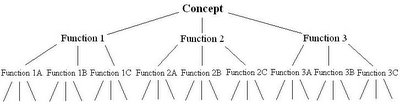
For concepts that may have too many details to fit onto one card, you may want to create a mind map (or as I like to call them: ‘Trickle Down Charts’): Write the concept on the top of a page (may be a theory, person, event, etc.) and then lines trickling down into immediate functions (like components or roles of the concept) and continue to break down each function as needed. As you review your mind map, cover the bottom of the page and work your way down, testing yourself on each function of the concept over and over until you have it memorized. Here is an example:
Here is what it may look like if I was to apply this chart to an area of my own studies:
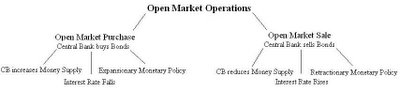
These charts will help guide your mind through the concept should you be asked to discuss something complex and detailed.
Don’t be afraid to use the people around you. Asking your instructor what topics and readings will be covered on the exam will help you focus your study time on the important areas of the course material. Forming a study group with classmates will allow you to pick up any material that you may have missed studying on your own.
For more suggestions, check out our How To Prepare For Exams workshop on Tuesday, February 28th in 236 Isbister from 2:30 to 3:20pm. In the meantime, I hope you enjoyed your Reading Week. You’ve earned it!
Greg
My favorite way to memorize information for tests and exams is using study cards. I go through my notes and readings several days before a test or exam and write out a flash card for each concept or idea that I feel I need to memorize. On one side of the card I write out a question (e.g. Define Categorical Data or Who Was Anton Chekhov?). I write the answer on the other side of the card. When I’m all done, my material is organized in a way that makes memorization easy. Simply review the cards regularly (repetition is key!) and once you feel that you know the answer, remove that card from the pile so that you can focus on the cards you haven’t yet memorized. As days pass, the pile will get smaller and smaller. The night before the test, go through every card one more time to make absolutely sure that you’ve memorized everything before getting a good night’s sleep. Don’t throw out your cards after your mid-term is over. You will likely need them for your final.
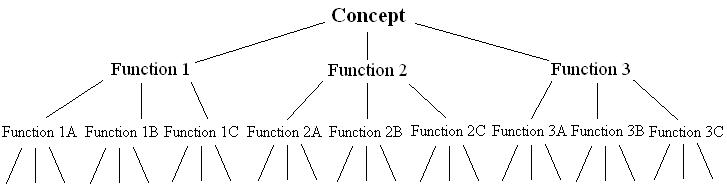
For concepts that may have too many details to fit onto one card, you may want to create a mind map (or as I like to call them: ‘Trickle Down Charts’): Write the concept on the top of a page (may be a theory, person, event, etc.) and then lines trickling down into immediate functions (like components or roles of the concept) and continue to break down each function as needed. As you review your mind map, cover the bottom of the page and work your way down, testing yourself on each function of the concept over and over until you have it memorized. Here is an example:
Here is what it may look like if I was to apply this chart to an area of my own studies:
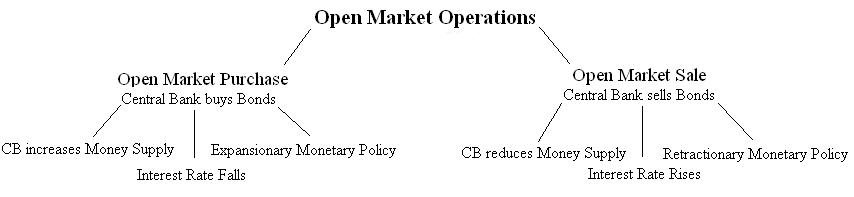
These charts will help guide your mind through the concept should you be asked to discuss something complex and detailed.
Don’t be afraid to use the people around you. Asking your instructor what topics and readings will be covered on the exam will help you focus your study time on the important areas of the course material. Forming a study group with classmates will allow you to pick up any material that you may have missed studying on your own.
For more suggestions, check out our How To Prepare For Exams workshop on Tuesday, February 28th in 236 Isbister from 2:30 to 3:20pm. In the meantime, I hope you enjoyed your Reading Week. You’ve earned it!
Greg
Monday, January 30, 2006
Tackling the required reading pile
The pile starts very small. As time passes, it seems to be growing. It grows and grows and grows until your desk is filled with assigned readings that you said to yourself “Oh, I’ll get to that later.” Before you know it, you can’t imagine how the pile got so high and you’ve got an exam or a paper to write on the material that you should have read once upon a time.
It’s not always easy and it certainly isn’t always fun, but like it or not, reading is a part of every student’s life. It would be great if everything we had to read for class was as exciting as the latest Harry Potter, but more often than not, you may be bored stiff by that pile of reading on your desk. I know that I certainly am sometimes. So how do students like you and I effectively tackle the pile before we regret it?
This term I’m taking a seminar course which means that every Wednesday, a small group of us sit around and talk about assigned readings. Our grade is partially based on participation and when there are only ten of us, it’s hard to hide in the back and pray that the professor doesn’t call on you to comment on what you didn’t read. Thankfully, this environment provides the much needed motivation for me to make sure that my readings are all done on time! Unfortunately, not all courses can provide that sort of motivation and so productive reading requires some self-discipline.
Have an agenda? Get one. I make sure that every week I go through all my courses and figure out exactly what I need to get done. Then I spread out all my reading to make sure that I don’t have too much to do at one time. I can read at my own pace, take breaks when I want and re-read the things that I don’t understand.
Some students are very careful with their textbooks. Personally, I’m never afraid to get out my highlighter and my pen and make lots of notes either in the book itself or on a separate piece of paper. This saves time when you need to review the work later on. By highlighting important passages and summarize important points on the side or bottom of the page makes returning to the work easier later on. Having forgotten much of what you read, your detailed graffiti will refresh your memory quickly and take up less of your time.
Still you have one hundred pages of dull reading to do by tomorrow. How do you get it done? Depending on the class, the material and your own learning style, a lot of what you read in those pages may provide details that may not be relevant to what you need to know. Many professors want you to understand general theories and ideas that can be found in the readings, not every particular detail. There have been times I’ve skimmed through chapters searching only for key points and been very successful with what I’ve found. If you’re a slow reader like myself, this technique may be useful.
Productive reading requires that you put yourself in an environment where you can be productive. This means different things to different people. Personally, when it comes to a task that requires my full attention, I need absolute quiet. Others may need music. So to get the ball rolling I make sure that I’m in a quiet space (like a library or a private room). This prevents me from being distracted and makes the reading a lot faster and easier to follow.
If everything we have to read was exciting and easy, then reading wouldn’t be a problem. But since it’s not, I hope that these reading strategies are helpful in the pursuit of successful reading!
For more information on successful reading, check out these links:
SQ3R
Text Marking and Highlighting
Greg
It’s not always easy and it certainly isn’t always fun, but like it or not, reading is a part of every student’s life. It would be great if everything we had to read for class was as exciting as the latest Harry Potter, but more often than not, you may be bored stiff by that pile of reading on your desk. I know that I certainly am sometimes. So how do students like you and I effectively tackle the pile before we regret it?
This term I’m taking a seminar course which means that every Wednesday, a small group of us sit around and talk about assigned readings. Our grade is partially based on participation and when there are only ten of us, it’s hard to hide in the back and pray that the professor doesn’t call on you to comment on what you didn’t read. Thankfully, this environment provides the much needed motivation for me to make sure that my readings are all done on time! Unfortunately, not all courses can provide that sort of motivation and so productive reading requires some self-discipline.
Have an agenda? Get one. I make sure that every week I go through all my courses and figure out exactly what I need to get done. Then I spread out all my reading to make sure that I don’t have too much to do at one time. I can read at my own pace, take breaks when I want and re-read the things that I don’t understand.
Some students are very careful with their textbooks. Personally, I’m never afraid to get out my highlighter and my pen and make lots of notes either in the book itself or on a separate piece of paper. This saves time when you need to review the work later on. By highlighting important passages and summarize important points on the side or bottom of the page makes returning to the work easier later on. Having forgotten much of what you read, your detailed graffiti will refresh your memory quickly and take up less of your time.
Still you have one hundred pages of dull reading to do by tomorrow. How do you get it done? Depending on the class, the material and your own learning style, a lot of what you read in those pages may provide details that may not be relevant to what you need to know. Many professors want you to understand general theories and ideas that can be found in the readings, not every particular detail. There have been times I’ve skimmed through chapters searching only for key points and been very successful with what I’ve found. If you’re a slow reader like myself, this technique may be useful.
Productive reading requires that you put yourself in an environment where you can be productive. This means different things to different people. Personally, when it comes to a task that requires my full attention, I need absolute quiet. Others may need music. So to get the ball rolling I make sure that I’m in a quiet space (like a library or a private room). This prevents me from being distracted and makes the reading a lot faster and easier to follow.
If everything we have to read was exciting and easy, then reading wouldn’t be a problem. But since it’s not, I hope that these reading strategies are helpful in the pursuit of successful reading!
For more information on successful reading, check out these links:
SQ3R
Text Marking and Highlighting
Greg
Thursday, December 22, 2005
Thesis Development Alex Trebeck Style
“Thesis Writing” for $200, please Alex.
Writers use various methods to develop their thesis statements. Maybe you’re one of the many writers who don’t arrive at a final thesis until after you’ve completed most of the paper. Often, you will have done background research, written some or most of the paper, and still be searching for the thesis to tie it all together. You have the answer(s), but may require a question to determine what the main point of the paper is. To determine the thesis for the paper, ask “What is this paper about?” The thesis statement is probably within your answer. In a way, thesis development is like the game show Jeopardy, where contestants are given the answers to the questions and must then provide the question.
For instance, imagine you are writing a paper on the benefits of libraries. During your research you may have come across information highlighting the kinds of information available in libraries.
Your main topics might be:
Next, turn your question into a statement that answers the question.
Your answer could be that libraries provide information in various forms for people to access. It is the multi-dimensional aspects libraries that may develop into your thesis statement.
An example thesis statement could be:
“Assessing the Primary Points of the Paper and Drawing Connections” for $400, Alex.
A thesis statement can be thought of as drawing a connection between two or more things or concepts that would otherwise not be naturally connected. Or, you may be highlighting the connection that is naturally there, but not usually observed. If you were writing a paper on the negative effects of smoking cigarettes you could first make points about the negative effects:
Your answer might focus on the negative effects smoking has on health
A thesis statement could then be formed:
Andy
Writers use various methods to develop their thesis statements. Maybe you’re one of the many writers who don’t arrive at a final thesis until after you’ve completed most of the paper. Often, you will have done background research, written some or most of the paper, and still be searching for the thesis to tie it all together. You have the answer(s), but may require a question to determine what the main point of the paper is. To determine the thesis for the paper, ask “What is this paper about?” The thesis statement is probably within your answer. In a way, thesis development is like the game show Jeopardy, where contestants are given the answers to the questions and must then provide the question.
For instance, imagine you are writing a paper on the benefits of libraries. During your research you may have come across information highlighting the kinds of information available in libraries.
Your main topics might be:
(1) information available through databases supplied by the libraryAsk a question like this: “What is common between all of the points I make about information and libraries?”
(2) information available in the book collections in a library
(3) information available in the periodical collections of libraries
Next, turn your question into a statement that answers the question.
Your answer could be that libraries provide information in various forms for people to access. It is the multi-dimensional aspects libraries that may develop into your thesis statement.
An example thesis statement could be:
“Libraries provide access to information in the forms of databases, books and periodicals.”This thesis makes a statement and encompasses all of the main topics in the paper.
“Assessing the Primary Points of the Paper and Drawing Connections” for $400, Alex.
A thesis statement can be thought of as drawing a connection between two or more things or concepts that would otherwise not be naturally connected. Or, you may be highlighting the connection that is naturally there, but not usually observed. If you were writing a paper on the negative effects of smoking cigarettes you could first make points about the negative effects:
(1) can lead to lung cancerAsk a question like: What do these three points have in common?
(2) can lead to emphysema
(3) is unhealthy to those around smokers.
Your answer might focus on the negative effects smoking has on health
A thesis statement could then be formed:
“Smoking is hazardous to the health of the smoker as well as to the health of anyone who is around a smoker.”Final Jeopardy: “What is using questions to form a thesis.”
Andy
Monday, December 19, 2005
Post-Exam Blues: Improve your future test results by learning from your mistakes and your successes
Sometimes I’ve been disappointed when I got poor or lower-than-expected marks on exams, even though I thought I understood the course material. In these situations, I’ve also felt frustrated because I thought that I’d wasted my time and energy preparing for this test. After the exam is over and the marks are posted, is there anything students can do to redeem a bad exam experience? And what can we do after a successful exam to make sure we match this success on future tests? By the time we get marks back after an exam, we may be sick and tired of looking at the material from that course. If we got a mark that was less than satisfactory we may avoid looking at a past exam because we feel bad about the grade. But, writing exams is not just about marks. Assessing exam performance is an important step in our learning process. Just as important, exams are a fact of student life. Students will find themselves going through the exam process on a regular basis. Having a “post-exam” system to follow is one of the secrets to student success.
Looking at marked exams offers both immediate and long-term benefits. You can use returned tests or exams to learn about how the instructor constructs exams.
So, next time you get a test or exam returned to you, remember you’re not done with it yet! It’s also important to look at what you did that worked. Don’t miss this important opportunity to evaluate your study and test-taking habits, and to help you prepare for the next exam. And, don't forget the LAC! LAC tutors would be more than happy to sit down with you post-test and help you evaluate what went wrong and what went right!
University of Texas has a useful page on preparing for and then evaluating your test results
http://www.utexas.edu/student/utlc/lrnres/handouts/1444.html
See this Middle Tennessee State University website for a dozen practical
reasons to look over your returned tests:
http://www.mtsu.edu/~studskl/rtrned.html
1 See the “Worksheet for Examining Returned Tests” in Longman, Debbie Guice, and Rhonda Holt Atkinson. College Learning and Study Skills. 2nd ed. St. Paul: West Publishing, 1991. p. 200.
Monique
Looking at marked exams offers both immediate and long-term benefits. You can use returned tests or exams to learn about how the instructor constructs exams.
• What patterns do you see in types of questions asked?Answering these questions can help you prepare more effectively for the next test or final exam in the course. Final exams also offer useful information about your skills.
• Do the test questions put more emphasis on lecture or text notes?
• What does the marked test reveal about grading patterns?
• Which study and test-taking strategies were most successful?With multiple choice exams, students are often allowed to take the question sheets with them when they leave an exam. After an exam, you can compare your answer sheets to the correct answers posted by the instructor. If essay exams are not returned, you can request to see your marked exam and evaluate your strengths as well as where you need to improve.1
• Which ones need improvement?
You may even use an analysis of your test-taking skills to influence course choices in the future.
• Which courses, or specific course sections, use testing methods that match my skills?
So, next time you get a test or exam returned to you, remember you’re not done with it yet! It’s also important to look at what you did that worked. Don’t miss this important opportunity to evaluate your study and test-taking habits, and to help you prepare for the next exam. And, don't forget the LAC! LAC tutors would be more than happy to sit down with you post-test and help you evaluate what went wrong and what went right!
University of Texas has a useful page on preparing for and then evaluating your test results
http://www.utexas.edu/student/utlc/lrnres/handouts/1444.html
See this Middle Tennessee State University website for a dozen practical
reasons to look over your returned tests:
http://www.mtsu.edu/~studskl/rtrned.html
1 See the “Worksheet for Examining Returned Tests” in Longman, Debbie Guice, and Rhonda Holt Atkinson. College Learning and Study Skills. 2nd ed. St. Paul: West Publishing, 1991. p. 200.
Monique
Friday, December 02, 2005
Check “this” out!
Though I am grateful to live in a world in which my computer checks and helps me correct my spelling and grammar, these technological tools have their limits. In particular, computer grammar checkers usually miss pronoun-antecedent agreement problems. Unfortunately, my computer’s Word program is not reliable when it comes to recognizing the pronoun errors I make when I mistakenly type “he” instead of “it”, “that” instead of “who” or “those” instead of “these”. More unfortunately, these pronoun errors can cause serious confusion for the reader.
For many writers, clearing up their use of the pronoun “this” can really improve their writing. “This” is a pronoun—a word used in place of a noun a person, place, or thing. The pronoun “this” derives its meaning from its antecedent—the noun it substitutes for. A pronoun must refer clearly and unmistakably to its antecedent in order for the meaning to be clear. The reference is unclear if it is ambiguous, implied, vague, or indefinite.
Writers may run into difficulty with “this” because the pronoun’s reference is needlessly broad.
Unclear reference
Unclear reference
To improve clarity, ask “this what?” when editing your writing, make sure each “this” refers clearly to some specific noun. Don’t leave your reader uncertain.
1. Example taken from Fowler, H. Ramsay, Jane E. Aaron, and Murray McArthur. The Little Brown Handbook. 4th ed. Toronto: Pearson, 2005: 289.
2. Example taken from Hacker, Diana. A Writer’s Reference. 4th ed. New York: Bedford/St.Martin’s, 1999: 192.
Monique
For many writers, clearing up their use of the pronoun “this” can really improve their writing. “This” is a pronoun—a word used in place of a noun a person, place, or thing. The pronoun “this” derives its meaning from its antecedent—the noun it substitutes for. A pronoun must refer clearly and unmistakably to its antecedent in order for the meaning to be clear. The reference is unclear if it is ambiguous, implied, vague, or indefinite.
Writers may run into difficulty with “this” because the pronoun’s reference is needlessly broad.
Unclear reference
More and more often, we are finding ourselves victims of serious crimes. We learn to accept this with minor complaints.1Readers are left wondering, what is it specifically that we learn to accept? To improve clarity, replace the pronoun with a noun
More and more often, we are finding ourselves victims of serious crimes. We learn to accept our fate with minor complaints.Writers are most likely to run into difficulties with “this” when they use “this” as the first word of a sentence.
Unclear reference
The voyageurs interacted freely with the Aboriginal peoples and traveled wherever furs and the waterways took them. This gave the voyageurs a great advantage.2In this example, it’s unclear if the voyageurs gained their advantage because of their free interaction, or because of their traveling.
To improve clarity, ask “this what?” when editing your writing, make sure each “this” refers clearly to some specific noun. Don’t leave your reader uncertain.
The voyageurs interacted freely with the Aboriginal peoples and traveled wherever furs and the waterways took them. This freedom and mobility gave the voyageurs a great advantage.
1. Example taken from Fowler, H. Ramsay, Jane E. Aaron, and Murray McArthur. The Little Brown Handbook. 4th ed. Toronto: Pearson, 2005: 289.
2. Example taken from Hacker, Diana. A Writer’s Reference. 4th ed. New York: Bedford/St.Martin’s, 1999: 192.
Monique
Saturday, November 26, 2005
Commas
Commas undoubtedly bring a new source of confusion to essay writing, while, ironically, they are used in order to clarify that which is written. When I began writing university papers, I was completely unsure of my comma use. Do I need one here? And, if so, why do I need one there? Are there places where I do not have commas, but require them?
Most of us are familiar with the use of commas to distinguish objects in a list or in a series: for example, “I went to the store and picked up some tomatoes, cantaloupes, rice and chicken.” Interestingly, the space before the ‘and’ in the above example requires a comma in some styles, but does not require a comma in other styles.
Commas are also used to separate an introductory word or phrase at the beginning of a sentence from the main part of the sentence, the part in which the ‘point’ of the sentence is written. Common introductory words and phrases include however, therefore, also, as a result, etc. An example of how this works is as follows: “As a result, Jonathon will not be able to make it to the basketball game this afternoon.” The introductory element in this case also works as a transition from the previous sentence, as there is some action that has led to Jonathon’s inability to make it to the basketball game this afternoon. Introductory elements in a sentence are, therefore, commonly used as transitions and are usually set off from the rest of the sentence with a comma.
In sentences there is often a main point, or a main clause, as well as a clarifying element, or a non-restrictive element, which reflects on the main point. This non-restrictive element is set off with a comma. For example: “Medical doctors treat many different diseases in humans, helping to keep us healthy.” The main point of the above sentence is that doctors treat many diseases in humans. The non-restrictive element helps to clarify this main statement, that doctors help to keep humans healthy, but it is not essential to the sentence. Non-restrictive/non-essential elements can be placed anywhere in a sentence, not only at the beginning. For example, the same sentence can be reorganized: “Medical doctors, helping to keep us healthy, treat many diseases in humans.”
In many sentences there are two main clauses that are connected by a coordinating conjunction, such as and, but, for, or, so, nor and yet, which are preceded by a comma. In other words, these are sentences with two main points. For example: “The weather is incredibly cold today, and it is raining. The fact that it is cold outside is a main point or clause, and the fact that it is raining outside is also a main point. In other words, both of the points could stand alone as sentences themselves. That is why a coordinating conjunction is used: to connect two clauses that would otherwise constitute separate sentences.
Another common use of the comma is to separate two adjectives that are modifying the same noun. For example: “This cold, foamy glass of beer is good.” In this case the comma is doing the job of the word ‘and’; it is combining two separate adjectives which modify the same object, the glass of beer.
The above explanations and examples are intended to illustrate a few of the most common uses of the comma.
Andrew
Most of us are familiar with the use of commas to distinguish objects in a list or in a series: for example, “I went to the store and picked up some tomatoes, cantaloupes, rice and chicken.” Interestingly, the space before the ‘and’ in the above example requires a comma in some styles, but does not require a comma in other styles.
Commas are also used to separate an introductory word or phrase at the beginning of a sentence from the main part of the sentence, the part in which the ‘point’ of the sentence is written. Common introductory words and phrases include however, therefore, also, as a result, etc. An example of how this works is as follows: “As a result, Jonathon will not be able to make it to the basketball game this afternoon.” The introductory element in this case also works as a transition from the previous sentence, as there is some action that has led to Jonathon’s inability to make it to the basketball game this afternoon. Introductory elements in a sentence are, therefore, commonly used as transitions and are usually set off from the rest of the sentence with a comma.
In sentences there is often a main point, or a main clause, as well as a clarifying element, or a non-restrictive element, which reflects on the main point. This non-restrictive element is set off with a comma. For example: “Medical doctors treat many different diseases in humans, helping to keep us healthy.” The main point of the above sentence is that doctors treat many diseases in humans. The non-restrictive element helps to clarify this main statement, that doctors help to keep humans healthy, but it is not essential to the sentence. Non-restrictive/non-essential elements can be placed anywhere in a sentence, not only at the beginning. For example, the same sentence can be reorganized: “Medical doctors, helping to keep us healthy, treat many diseases in humans.”
In many sentences there are two main clauses that are connected by a coordinating conjunction, such as and, but, for, or, so, nor and yet, which are preceded by a comma. In other words, these are sentences with two main points. For example: “The weather is incredibly cold today, and it is raining. The fact that it is cold outside is a main point or clause, and the fact that it is raining outside is also a main point. In other words, both of the points could stand alone as sentences themselves. That is why a coordinating conjunction is used: to connect two clauses that would otherwise constitute separate sentences.
Another common use of the comma is to separate two adjectives that are modifying the same noun. For example: “This cold, foamy glass of beer is good.” In this case the comma is doing the job of the word ‘and’; it is combining two separate adjectives which modify the same object, the glass of beer.
The above explanations and examples are intended to illustrate a few of the most common uses of the comma.
Andrew
Sunday, October 16, 2005
Seeing the Trees: Preparing for Multiple Choice Tests
There is no magic pill, but here are some tips that should produce better results.
- Pay attention to the trees. It's relatively easy to see a large clump of trees, know it's a forest, even know the forest's name, but it's much harder to tell someone what trees that forest is made up of. In other words, it is important to not only look at the larger overarching ideas (historical periods, theories, ideas, systems, networks) but also the details that support them. Students can develop a fairly general sense of how, for example, the vascular system works, but may not be able to list the veins involved, how they connect or what they do.
- Create study cards, with the concept on one side and the details on the other (see this handout for an example of how to make study cards)
- Use the Cornell Note Taking system , cover up the main body of the notes and then use the column prompts to ask questions.
- Answer the review questions at the back of the chapter/textbook or in the study guide. Students are often worried that this is a waste of time while in fact, the study questions help them learn the information and practice applying that new information.
- Review on a regular, preferably daily, basis over shorter periods of time rather than once a week or just before the test. Tests show that people remember the first bit of information they study, the last bit of information they study, and very little in between. Thus, studying in shorter bits, 20 to 40 minute intervals, means that students will remember more and forget less because the interval between the first bit of information and the last bit of information is smaller.
There is more, but these tips are a start. Writing multiple choice tests is a new skill set for many students. Once they have learned it, multiple choice tests and exams become much less daunting.
The Learning Assistance Centre (LAC) has a handout available called "Tips for taking multiple choice tests."
The LAC is also giving a series of workshops that focus on test/exam preparation and writing multiple choice tests. They are:
How to Prepare for Exams on October 19th and Tips for Multiple Choice Tests and Exams on October 20th. Both workshops will be in 340 Helen Glass at 2:30.
Other useful websites are:
http://www.studygs.net/tsttak3.htm
The University York has a page on multiple choice tests. The best part of this page is that it includes examples of multiple choice questions and what students should look for when answering questions.
http://www.yorku.ca/cdc/lsp/eponline/exam4.htm
Cornell, the home of Cornell notes (mentioned above), has an excellent handout on writing multiple choice tests. (Note: This handout is in pdf format. Readers will need Adobe Reader to view it.)
http://www.clt.cornell.edu/campus/learn/LSC%20Resources/multiplechoicetests.pdf
Ryerson University has a page on how to study for multiple choice tests.
http://www.ryerson.ca/learningsuccess/resources/TS7.htm
Thursday, September 29, 2005
The writing process
Writing essays can seem difficult and challenging at the best of times but at the beginning of university this is particularly so. When compared to high-school writing assignments the complexity and length of university level papers can be daunting. How does a student adapt to this change?
Understanding the guidelines for the assignment is a first step. Knowing how many pages are to be in the paper, how many references are required and the date on which the essay is due all help to orient your mind towards beginning and completing the assignment. Once these questions are answered the next thing to do is to read the material from which you need to draw from for your paper.
While reading, it is good practice to take notes and/or remember ideas with certain marks and techniques. By doing this, the information that will be of assistance in the writing process will be easy to access. This stage of the writing process can often be difficult for new university students, as it is the process of idea formulation—beginning to put ideas into words. Writing down all relevant ideas that come up during this stage helps, as an excess of information is preferable to not having enough.
After the material is read then the true idea formulation begins. Sorting through the ideas that have been written down during research and organizing them into categories which may turn into paragraphs is another important step in the writing process. Once the ideas are written down and organized, refer back to the parameters of the assignment for guidelines such as length. It is often an easy guideline to have one to two paragraphs per page of double-spaced text, and one individual idea or group of related ideas in each paragraph. For example, for a six-page paper you may need nine paragraphs, one of these paragraphs as the introduction, seven paragraphs with ideas relating to your topic and one paragraph as a conclusion. This is a rough guideline, but can help when beginning to write university papers.
The process of organization is a great way to become familiar with the ideas that will end up in the paper. Organization is a first step and is perhaps one of the most important steps when learning how to adapt to the expectations for university papers. After becoming familiar with the types of organizational strategies that work most effectively for you it is then possible to become creative with these techniques and truly begin to formulate your own style in the writing process.
Useful Links for ‘the writing process’:
UNC Writing Center—handouts and links page
http://www.unc.edu/depts/wcweb/handouts/index.html
Linn Benton community College Learning Center—Organization Strategies
http://cf.linnbenton.edu/depts/lrc/web.cfm?pgID=351
Union Institute and University—Organizational Strategies for Writing
http://www.tui.edu/ASN/Writing_Process/Organization/default.asp
Andy
Understanding the guidelines for the assignment is a first step. Knowing how many pages are to be in the paper, how many references are required and the date on which the essay is due all help to orient your mind towards beginning and completing the assignment. Once these questions are answered the next thing to do is to read the material from which you need to draw from for your paper.
While reading, it is good practice to take notes and/or remember ideas with certain marks and techniques. By doing this, the information that will be of assistance in the writing process will be easy to access. This stage of the writing process can often be difficult for new university students, as it is the process of idea formulation—beginning to put ideas into words. Writing down all relevant ideas that come up during this stage helps, as an excess of information is preferable to not having enough.
After the material is read then the true idea formulation begins. Sorting through the ideas that have been written down during research and organizing them into categories which may turn into paragraphs is another important step in the writing process. Once the ideas are written down and organized, refer back to the parameters of the assignment for guidelines such as length. It is often an easy guideline to have one to two paragraphs per page of double-spaced text, and one individual idea or group of related ideas in each paragraph. For example, for a six-page paper you may need nine paragraphs, one of these paragraphs as the introduction, seven paragraphs with ideas relating to your topic and one paragraph as a conclusion. This is a rough guideline, but can help when beginning to write university papers.
The process of organization is a great way to become familiar with the ideas that will end up in the paper. Organization is a first step and is perhaps one of the most important steps when learning how to adapt to the expectations for university papers. After becoming familiar with the types of organizational strategies that work most effectively for you it is then possible to become creative with these techniques and truly begin to formulate your own style in the writing process.
Useful Links for ‘the writing process’:
UNC Writing Center—handouts and links page
http://www.unc.edu/depts/wcweb/handouts/index.html
Linn Benton community College Learning Center—Organization Strategies
http://cf.linnbenton.edu/depts/lrc/web.cfm?pgID=351
Union Institute and University—Organizational Strategies for Writing
http://www.tui.edu/ASN/Writing_Process/Organization/default.asp
Andy
Ch, Ch, Changes . . .
As of September 29th, 2005 the LAC tutorial staff will be temporarily located in the reference section of the Elizabeth Dafoe library (next to the writing tutors). No appointments will be made while the tutors are located in the library. However, students are welcome to drop-in during the periods listed below. You can see the LAC tutors for writing and/or study skill concerns. When we move into our new space (201 Tier) appointments will be accepted again.
LAC Library Hours
Monday 9 - 12 & 1 - 4
Tuesday 9 - 4:30
Wednesday 8:30 - 12:00 & 1:00 - 4:30
Thursday 8:30 - 11:00 & 12:00 - 1:00
Friday 8:30 - 11:30 & 12:30 - 4:30
We can be reached at 480-1481.
We are hoping to be in our new space, 201 Tier, late October. The space is looking great and we are looking forward to establishing ourselves in the new digs.
Workshops for next week are:
Articles: The/A/An on Oct 4 in 340 Helen Glass at 2:30-3:30
Learning and Memory on October 6 in 340 Helen Glass at 2:30 - 3:30
If you can't come to the workshop (or even if you can) here are some useful Learning and Memory websites:
http://www.brainconnection.com/topics/?main=fa/memory-formation
This site is aimed at secondary teachers but the information is still relevant and useful.
http://brain.web-us.com/memory/improving_memory.htm
The sites aim is to sell Advanced Cognitive Enhancers but the information found on the page linked to above is solid, and the techniques are ones we teach ourselves.
http://owll.massey.ac.nz/studyskills/memoryskills/memoryskills.htm
Massey University (New Zealand) emphasizes the important of " Context and Environment, State, Regular Breaks, Understanding, and Active Learning" for learning and memory
http://www.bucks.edu/~specpop/Actfrm.htm
And finally, Bucks County Community College (US) provides a list of links to learning style inventories and other learning related sites. Check some of them out, and find out how you learn.
LAC Library Hours
Monday 9 - 12 & 1 - 4
Tuesday 9 - 4:30
Wednesday 8:30 - 12:00 & 1:00 - 4:30
Thursday 8:30 - 11:00 & 12:00 - 1:00
Friday 8:30 - 11:30 & 12:30 - 4:30
We can be reached at 480-1481.
We are hoping to be in our new space, 201 Tier, late October. The space is looking great and we are looking forward to establishing ourselves in the new digs.
Workshops for next week are:
Articles: The/A/An on Oct 4 in 340 Helen Glass at 2:30-3:30
Learning and Memory on October 6 in 340 Helen Glass at 2:30 - 3:30
If you can't come to the workshop (or even if you can) here are some useful Learning and Memory websites:
http://www.brainconnection.com/topics/?main=fa/memory-formation
This site is aimed at secondary teachers but the information is still relevant and useful.
http://brain.web-us.com/memory/improving_memory.htm
The sites aim is to sell Advanced Cognitive Enhancers but the information found on the page linked to above is solid, and the techniques are ones we teach ourselves.
http://owll.massey.ac.nz/studyskills/memoryskills/memoryskills.htm
Massey University (New Zealand) emphasizes the important of " Context and Environment, State, Regular Breaks, Understanding, and Active Learning" for learning and memory
http://www.bucks.edu/~specpop/Actfrm.htm
And finally, Bucks County Community College (US) provides a list of links to learning style inventories and other learning related sites. Check some of them out, and find out how you learn.
Friday, September 23, 2005
Keeping the chaos at bay
In the last week or so, I have met numerous students who are new to the university environment in which large classes, lots of reading, and long lectures are the norm. Several of these students have told me that they are feeling “overwhelmed”, “in over their head”, or simply “a little lost”. I’d like to make a few suggestions if you are feeling the same way.
First, go to your lectures and keep going to your lectures. With the new freedom university allows, it’s easy to skip when very few profs check to see if you’re there or not. However, even if the textbook and the lecture are similar, consider the time in lecture as study time or time spent learning the material.
Second, go beyond simply marking the due dates or deadlines in your day planner. Make appointments with yourself to study or establish regular study/reading times. While high school or work environments sometimes allow for slow times that are interrupted by cramming or hectic days, in university most new students find it less stressful and more effective steadily working on something for each course.
Finally, if you are struggling, get help immediately. If you ignore the problem it will only get worse. Write out a specific list of questions and take those questions to your prof’s office hours. Alternatively, you could exchange or photocopy notes and ideas with a classmate.
The adjustment to university life does get easier…just make sure that you are constantly moving in the direction of your goals.
Cosette
First, go to your lectures and keep going to your lectures. With the new freedom university allows, it’s easy to skip when very few profs check to see if you’re there or not. However, even if the textbook and the lecture are similar, consider the time in lecture as study time or time spent learning the material.
Second, go beyond simply marking the due dates or deadlines in your day planner. Make appointments with yourself to study or establish regular study/reading times. While high school or work environments sometimes allow for slow times that are interrupted by cramming or hectic days, in university most new students find it less stressful and more effective steadily working on something for each course.
Finally, if you are struggling, get help immediately. If you ignore the problem it will only get worse. Write out a specific list of questions and take those questions to your prof’s office hours. Alternatively, you could exchange or photocopy notes and ideas with a classmate.
The adjustment to university life does get easier…just make sure that you are constantly moving in the direction of your goals.
Cosette
Response to Close Reading
I’d like to respond to Anita’s blog (see Close Reading) about close reading with some practical suggestions related to the reading of literature or other narrative texts. My first suggestion is to mark your texts. When I read a novel, I write a few words or a short phrase about the plot on the top outside corner of each page. For example, on page one I might write “Harry gets letter” (though, I might abbreviate “Harry” as “H”), and on page two I might write “H boards train.” I might also use the top left corner to note details about characters, such as, “H meets Sarah—lawyer, sister to Robert”. This technique not only helps me stay focused on my reading, but also makes it easier to find textual references later (in class, when writing an essay). In the margins I write definitions of words I had to look up. I also circle, underline and box words or phrases that are important to the theme, or reveal a pattern of word choices and/or literary devices. I try to make some note in the margin explaining what/why I’ve underlined, circled, or boxed; for instance, if I notice that many of the metaphors used in a text are animal-based, I might write “animal” in the margin next the underlined comparison of a man to a bird. I might further highlight a pattern by recording other page numbers where I see similar animal comparisons: “SEE 35, 78, 147”. I might also use the margins to ask questions, such as “who is ‘the man’?” or “why does H run away?”. In novels that jump back and forth in time/place, or where there are shifting narrative points of view, I mark these changes in the text, as well. For example, I might write “SHIFT to Vince, 1938” or “Flashback--Paris 1910.” These marginal notes really help me to keep track of what’s going on in a text.
Monique
Monique
Monday, September 19, 2005
First Things First
If you think education is expensive, try ignorance.”
-Derek Bok
First things first, congratulations for registering for university. Coming to university is a huge investment in your future and can bring you much success and happiness. Right now, you might only be thinking of how expensive it is, and you’re right. But if you play your cards right, it is infinitely worth it. OK, enough preaching.
“First things first” is a saying I’ve used over the years to remind my daughter and myself of the responsibilities we have. With her I’ve said that she can’t have a candy until she finishes her healthy food. I use it to remind myself that I need to do a more urgent task before I can do a less urgent but more pleasing task, or even have my little fun. It’s a catchy little phrase that’s helpful for keeping us acting responsibly.
“First things first” can also be a useful little chant when you’re feeling really swamped and you don’t know what to do first. Sometimes just singing “first things first” allows me to figure out what is my priority, what needs to be done before anything else. Knowing that you’re doing the most important task is in itself calming
September is a Super Fun month here at The University of Manitoba and that’s a good thing. It is important to meet friends and new people, enjoy the entertainment and have some fun. But, remember why you’re here and those priorities will help you know what your first things first are.
Natalie
Tuesday, September 06, 2005
WOWW it's Your First Week!
The first week of classes is rapidly approaching and campus is starting to buzz. Welcome to new students of UM and welcome back to returning students. You may feel overwhelmed this first week, as you go through orientation, buy books or claim ids, and get to know how you will get to the U, where you are taking classes, and what your routine might look like.
In the midst of the bustle of the first week, we at the LAC want to remind you that we are around to support your learning process! And WOWW have we got ways that you can tap into learning:
Workshops are a popular medium for many students to learn more about a particular area of study or writing. See our workshops schedule: http://www.umanitoba.ca/student/resource/learning/study%20skills%20workshops.shtml and plan to attend those (free) workshops that you think will help you! Whether it’s about writing or studying, you are bound to find some tips.
One-to-one meetings with a Learning Skills Specialist at the LAC is another option for those of you who feel less comfortable in a group. You can talk together about pretty much anything to do with learning or writing; if we can’t directly assist you, we can probably refer you to someone who can!
- Description of our services and location
- Printable handouts on a variety of learning and writing issues
- Helpful links to UM sites as well as other study skills and writing sites
- Online tutoring
- Workshop information
- Writing Tutor Program information
Your peers, UM students who are experienced and capable writers, offer their time to help you one-to-one with writing. You can find them in Elizabeth Dafoe library from mid Sept to end of Nov and mid Jan to mid Apr. Visit the website http://www.umanitoba.ca/student/resource/learning/writing%20tutors.shtml for their schedule and info on how best to use your time with the tutors.
Where is the LAC?
Currently we are at 520 University Centre (same building as the bookstore, Tim’s and IQ’s—you’ll find us at the end of the hall on the 5th floor). In October we will move: find updated location information on our website as moving day comes closer.
Thursday, August 18, 2005
Making the most of your course outline: University 1
In the first year of my undergraduate degree, I didn’t place a great deal of importance on my course outlines or syllabi. I mean, after I had marked the most important tests or assignment dates in my agenda, what did I really need the course outline for? Unless I had a due date that I couldn’t meet and I had to contact the prof. for an extension, I didn’t really see the point of referring back to the course outline during the semester.
As a result, I did some of the readings in my first year but certainly not many of the readings. I spent a lot of time working backwards by reading and studying only the topics or chapters that my professor told me were important and would likely “be on the exam”. Admittedly, I was pretty stressed out any time a test or assignment date got close.
After taking numerous university courses (I’ve lost count) and eventually taking on an instructor position at the university, I’ve come to realize the value of a course outline. Just as some students find “To Do” lists or grocery check lists useful to get short-term things done, a course outline is a kind of “To Do” list or check-list which your professor has made for you to reach your goals in a particular course.
Still not sure? Think of it this way; if you went to the supermarket with an incomplete list of foods for your breakfast the next morning, you could wake up to find you have five kinds of cereal and no milk. The same is true if you pick and choose the readings (or assignments) to complete from your course outline; you most likely won’t be prepared to face the (test) day and in the end you’ll probably be hungry for a better result in the course.
For me, completing all (or at least the majority) of my course readings led to less stress and better grades at any stage of my university education. Now as an instructor, I tell my students to (aim to) read and review material regularly so that they will be less likely to have holes or gaps in their knowledge of a subject, something critical for many future careers after university.
Cosette
Friday, August 05, 2005
Close Reading
I read a lot of fiction. Reading fiction allows me to explore reality in a different way; some would call what I do reading for pleasure. However, it is possible that my casual reflection of the books I read follows the process of close reading. Essentially, close reading is critical reading of literary texts. See helpful links at the end of the blog.
Deborah Knott, writing for University of Toronto, identifies critical reading as moving from reading for information to reading for ways of thinking about a subject (www.utoronto.ca/writing/critrdg.html). When responding to literature, close reading allows you to actively explore what you as a reader and writer think about a literary piece. English professor Dr. Wheeler offers a process to follow when reading works of literature which I’ve roughly paraphrased and interpreted and then applied to Sunshine.
So in this blog, I experimented on how well the steps suggested by Dr. Wheeler would work on my reading of Sunshine by Robin McKinley and was pleased with the process! You’ll notice I did not include all my responses, but you can see the process works. I wrote down my thoughts as I asked myself questions about:
My first impressions of the passage
What two things stuck out for you, and how are they related?
1. The use of first person narrative pulled me into the character quickly: she’s a baker and has an interest in “Others” (vampires, werewolves etc).
2. The vocabulary is rich, so it makes it sound like this young woman (probably in her early 20s?) is smart.
These two impressions relate in that very quickly in the novel, the author draws the reader into the story with sensual detail through the voice and imagination of a sharp young woman.
What was the mood of the writing?
There’s tension right away. She’s talking about normal things like watching movies with her family, but her first sentence “It was a dumb thing to do but it wasn’t that dumb,” and then other words on the first page like, “crawl home to die,” “warrior cohort,” “high tech blasting gear” allude to bigger problems than fatigue or cockroaches.
Vocabulary and Diction
Which words are noticeable? Why? How do these words relate to each other?
I’ve already mentioned some. Other sensual words would be “clicking” to refer to the cockroaches, “slouching” to refer to getting out of bed, and “Cinnamon Rolls as Big as Your Head” to give me an instant visual and make me salivate.
Look closer: are there other words that have more than one meaning? How do they add to your understanding as a reader?
Patterns
Broaden your view: think about images in the text. What do they remind you of? (other parts of the text, other pieces by same author, other literary works)
How does the text sound? Are phrases and sentences long, dense, and flowing, or are they brief, abrupt and percussive? What does the sound have to do with the ideas the writer is communicating? Look here to Dr. Wheeler’s original guideline because he offers detailed points you can add to your close reading that will enrich your understanding.
Point of View/Characterization
Who’s speaking? How do you feel about the characters? Why? How does the author get you to feel that way? Through description? Dialogue? Action?
Symbolism
Look for anything that seems to represent something else. What symbols are in the text? Metaphors? If you need help with literary terms, consult your course notes, text, or click on Dr. Wheeler’s link http://web.cn.edu/kwheeler/lit_terms_S.html .
Good luck with your own close reading!
Cheers,
Anita
Helpful Links on Close Reading
http://webs.cn.edu/kwheeler/reading_lit.html
Put together by an English prof, this site offers questions you can follow to read a literary text closely and provides and example of a close reading of a poem.
www.mantex.co.uk/samples/closeread.htm
This website offers a sample of close reading of Bleak House by Charles Dickens.
www.fas.harvard.edu/~wricntr/documents/CloseReading.html
Patricia Kain, for the Writing Center at Harvard University details the steps of close reading using an essay by an anthropologist as the reading material.
Deborah Knott, writing for University of Toronto, identifies critical reading as moving from reading for information to reading for ways of thinking about a subject (www.utoronto.ca/writing/critrdg.html). When responding to literature, close reading allows you to actively explore what you as a reader and writer think about a literary piece. English professor Dr. Wheeler offers a process to follow when reading works of literature which I’ve roughly paraphrased and interpreted and then applied to Sunshine.
So in this blog, I experimented on how well the steps suggested by Dr. Wheeler would work on my reading of Sunshine by Robin McKinley and was pleased with the process! You’ll notice I did not include all my responses, but you can see the process works. I wrote down my thoughts as I asked myself questions about:
My first impressions of the passage
What two things stuck out for you, and how are they related?
1. The use of first person narrative pulled me into the character quickly: she’s a baker and has an interest in “Others” (vampires, werewolves etc).
2. The vocabulary is rich, so it makes it sound like this young woman (probably in her early 20s?) is smart.
These two impressions relate in that very quickly in the novel, the author draws the reader into the story with sensual detail through the voice and imagination of a sharp young woman.
What was the mood of the writing?
There’s tension right away. She’s talking about normal things like watching movies with her family, but her first sentence “It was a dumb thing to do but it wasn’t that dumb,” and then other words on the first page like, “crawl home to die,” “warrior cohort,” “high tech blasting gear” allude to bigger problems than fatigue or cockroaches.
Vocabulary and Diction
Which words are noticeable? Why? How do these words relate to each other?
I’ve already mentioned some. Other sensual words would be “clicking” to refer to the cockroaches, “slouching” to refer to getting out of bed, and “Cinnamon Rolls as Big as Your Head” to give me an instant visual and make me salivate.
Look closer: are there other words that have more than one meaning? How do they add to your understanding as a reader?
Patterns
Broaden your view: think about images in the text. What do they remind you of? (other parts of the text, other pieces by same author, other literary works)
How does the text sound? Are phrases and sentences long, dense, and flowing, or are they brief, abrupt and percussive? What does the sound have to do with the ideas the writer is communicating? Look here to Dr. Wheeler’s original guideline because he offers detailed points you can add to your close reading that will enrich your understanding.
Point of View/Characterization
Who’s speaking? How do you feel about the characters? Why? How does the author get you to feel that way? Through description? Dialogue? Action?
Symbolism
Look for anything that seems to represent something else. What symbols are in the text? Metaphors? If you need help with literary terms, consult your course notes, text, or click on Dr. Wheeler’s link http://web.cn.edu/kwheeler/lit_terms_S.html .
Good luck with your own close reading!
Cheers,
Anita
Helpful Links on Close Reading
http://webs.cn.edu/kwheeler/reading_lit.html
Put together by an English prof, this site offers questions you can follow to read a literary text closely and provides and example of a close reading of a poem.
www.mantex.co.uk/samples/closeread.htm
This website offers a sample of close reading of Bleak House by Charles Dickens.
www.fas.harvard.edu/~wricntr/documents/CloseReading.html
Patricia Kain, for the Writing Center at Harvard University details the steps of close reading using an essay by an anthropologist as the reading material.
Friday, July 08, 2005
Colours: A tip for setting your priorities
As a result of my colourful “to do” lists, my list of tasks not only feels shorter, but I keep my priorities straight.
Cosette
Thursday, June 30, 2005
Writing Article Reviews
Undergraduate students are often asked to write article reviews because they introduce students to the field and help to develop their critical thinking skills. Some professors have their own specific requirements for the article review, so always refer to those, but I will offer you some general guidelines that will help you get started. .
The purpose of reviewing an article review is to provide your reader with your evaluation of the article along with a brief summary of its argument and reasoning. Organize your paper using a thesis statement, just like in a research paper, but your thesis here will be an evaluation of the article and the reasons for such a positive or negative appraisal. Often, articles have strengths and weaknesses and it’s important to list to your reasons for both. Here are a few questions to help you assess the quality of an article:
These tips for writing an article review were gathered from the following links. Check them out for more information.
University of Toronto
Queens
Cornell University
Natalie
The purpose of reviewing an article review is to provide your reader with your evaluation of the article along with a brief summary of its argument and reasoning. Organize your paper using a thesis statement, just like in a research paper, but your thesis here will be an evaluation of the article and the reasons for such a positive or negative appraisal. Often, articles have strengths and weaknesses and it’s important to list to your reasons for both. Here are a few questions to help you assess the quality of an article:
- Is the author a reputable researcher in this field?
- Are the references used for the study current and reputable?
- Is the article organized and clearly expressed or is it unnecessarily confusing?
- Is the author free of bias or charged with emotion?
- Do the results of the study confirm or disprove what the author expected?
- Does the conclusion follow the given evidence, or is it somehow unrelated?
- Why is this article important?
These tips for writing an article review were gathered from the following links. Check them out for more information.
University of Toronto
Queens
Cornell University
Natalie
Thursday, June 23, 2005
How to write a paper in a week or less
As many of you may have recently discovered, the demands of intersession courses are intense. For instance, it’s not uncommon that you are required to write a paper (or more!) per week. Given that this is the hard reality of taking a short course, how does one survive? Here are a few tips for the time-crunched writer:
- Start immediately! There is no time to waste during intersession. As soon as the tasks are assigned, get going on them.
- Whenever possible, write on a topic that you know something about. This way, you don’t waste a lot of time at the research stage figuring out the basics of the topic.
- Keep the topic narrow and simple (straightforward?). Whenever possible, compare two ideas or authors, not four or five, for instance.
- Choose less, better resources to write the paper. Chances are that you will not have time to read that stack of 12 books, 9 journal articles, and 3 websites. Go for fewer, more recent (in the last 5 years) academic sources, or sources that your professor tells you are the most influential.
- In the case where you do need to use several resources to write the paper, read the introductions, chapter summaries, titles, and the first sentence of each paragraph to carefully determine which chapters, sections, or pages to read carefully in order to gain useful information which you can quote, paraphrase, or summarize.
- Create the bibliography or reference list as you read the texts.
- As you read, start making an outline (point form) by organizing: your thoughts, the main ideas that reoccur in the texts, and useful quotes or paraphrases. When you are done reading, you will have the skeleton of your paper (it may require some rearranging). Then you can add in the explanations (full sentences) to create paragraphs.
- Likely you will be writing for several hours at a time. Take an occasional short break. Clear your head and get back to it!
- Make a plan of attack. While a regular session paper can be planned over weeks, now you need to make a short-term action plan. To reduce that feeling of being rushed, plan for more time than you likely need each day. If you finish early, great! Go on to tomorrow’s task.
Subscribe to:
Posts (Atom)